
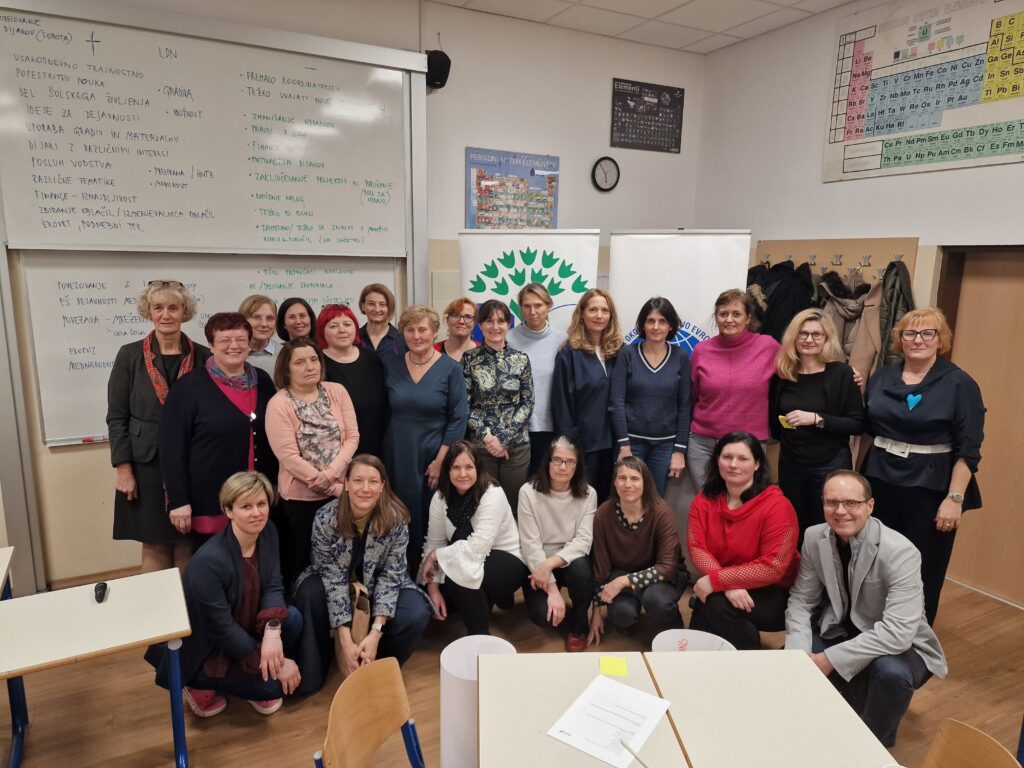
9 February 2026 – As part of the Greenovate 2.0 project (Engaging Youth in a Digital Green Future 2.0, Erasmus+), a second local follow-up event was organised under the title “Knowledge of Students Today for Green Decisions Tomorrow.” The event brought together 25 secondary school teachers from across Slovenia to explore circular economy principles through a whole-school approach, with a focus on how knowledge gained in classrooms can translate into everyday sustainable decisions and long-term behavioural change.
The event was organised by DOVES – FEE Slovenia (Eco-Schools and Young Reporters for the Environment programmes) and aimed to strengthen teachers’ capacity to empower young people to implement green practices aligned with the European Green Deal.
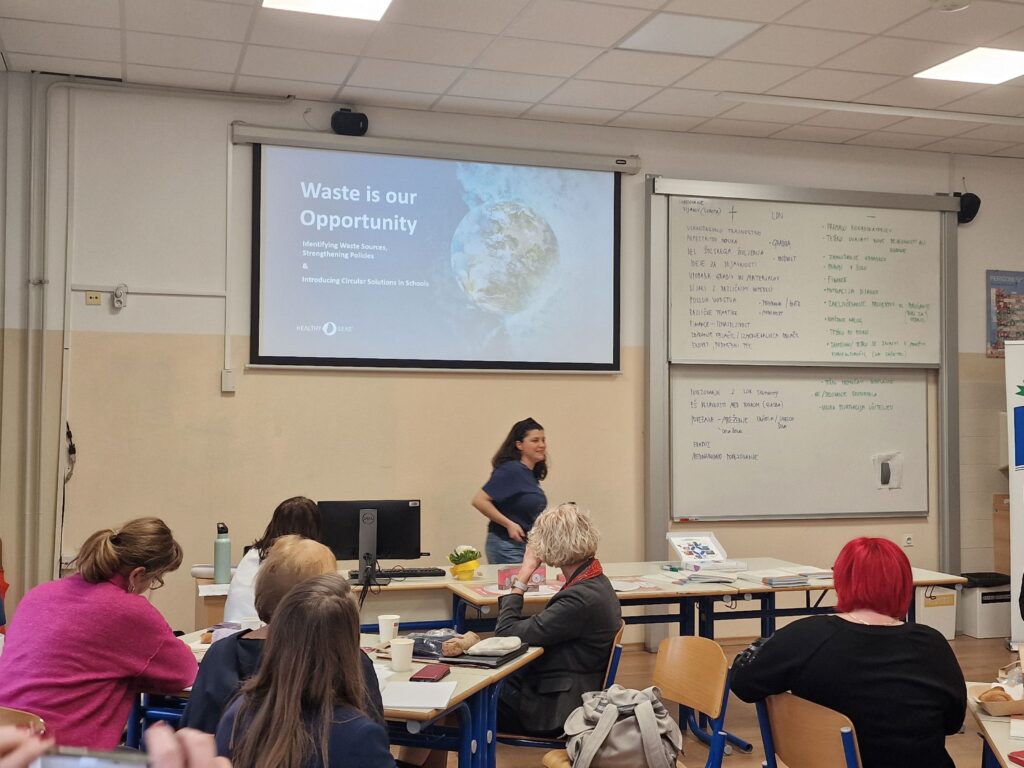
Circularitiy as a Guiding Principle to a Zero-Waste School
The central theme was how to systematically design and implement a zero-waste school model based on circular economy principles. Participants explored how to move beyond isolated activities and instead develop strategic, long-term action plans grounded in prevention, reuse, repair, redesign and responsible consumption.
The programme was enriched by the participation of representatives from Healthy Seas and AquafilSLO. The Healthy Seas representative provided practical recommendations on how to approach the development of a zero-waste school plan through circular thinking and how to search for solutions beyond established frameworks. Participants tested selected elements of the methodology through a practical exercise, reflecting on real-life school scenarios and identifying opportunities for improvement.
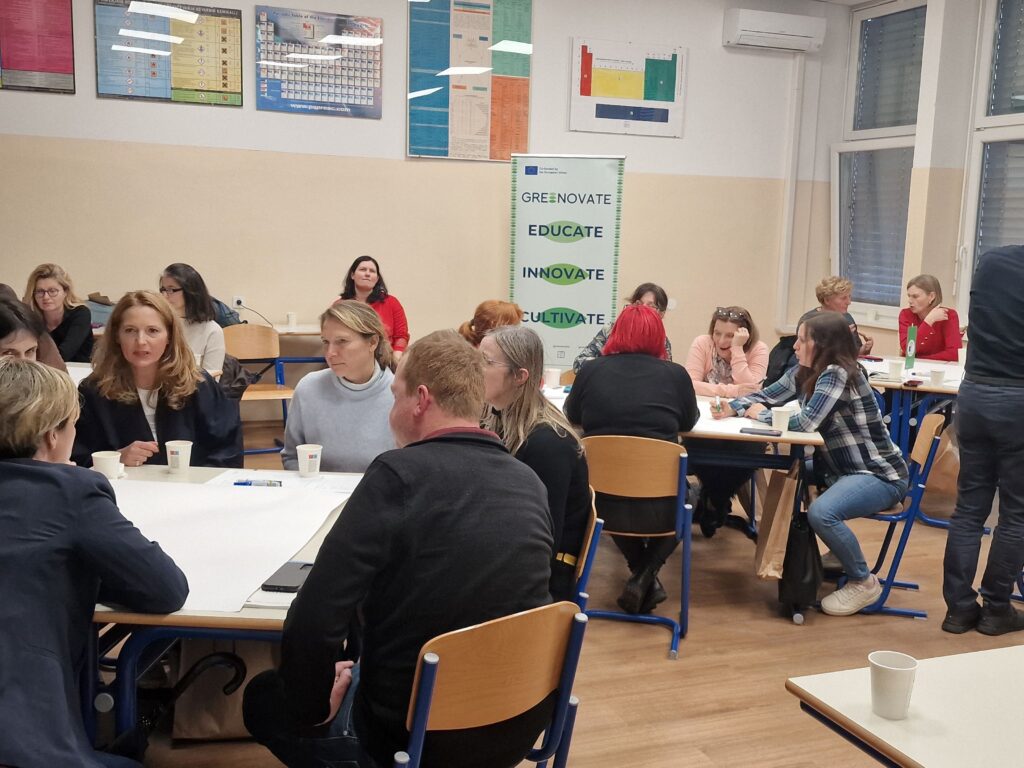
Circular Economy in Practice: Industry and Everyday Life
Participants were also welcomed by a representative of AquafilSLO, who presented concrete examples of circular innovation in the textile value chain. As a tangible illustration of circular materials in everyday life, all participants received T-shirts made of ECONYL® regenerated nylon. This practical example reinforced the message that circular solutions are not abstract concepts but real, functional materials already integrated into daily products and industries.
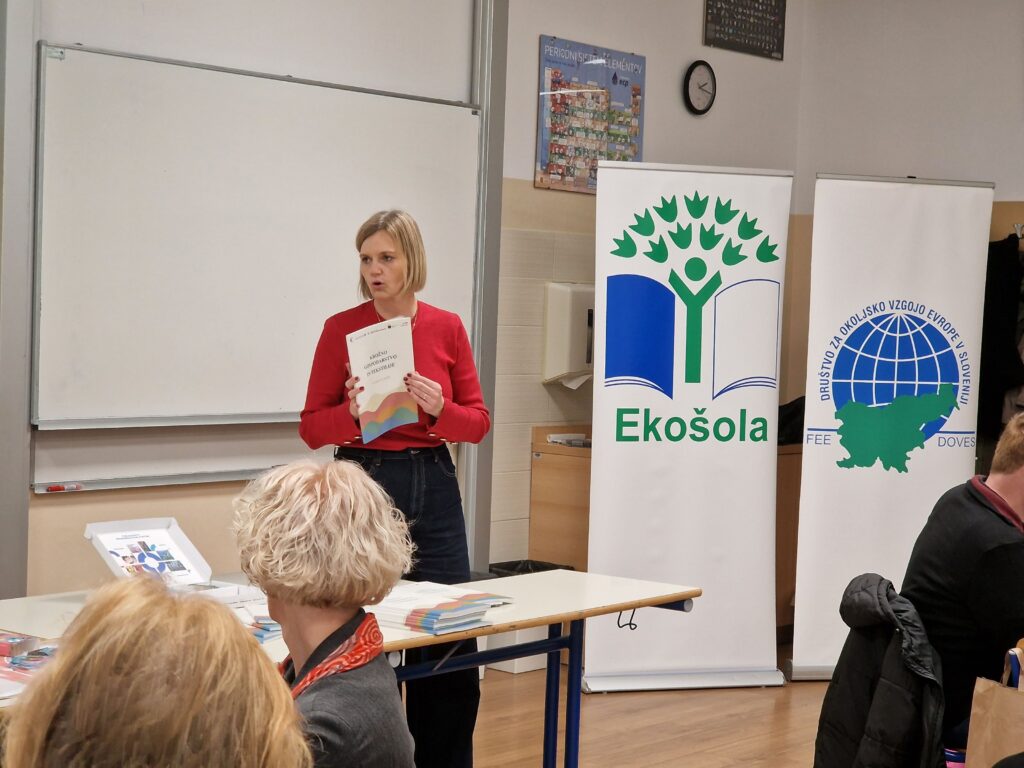
Connecting Schools with the European Green Deal
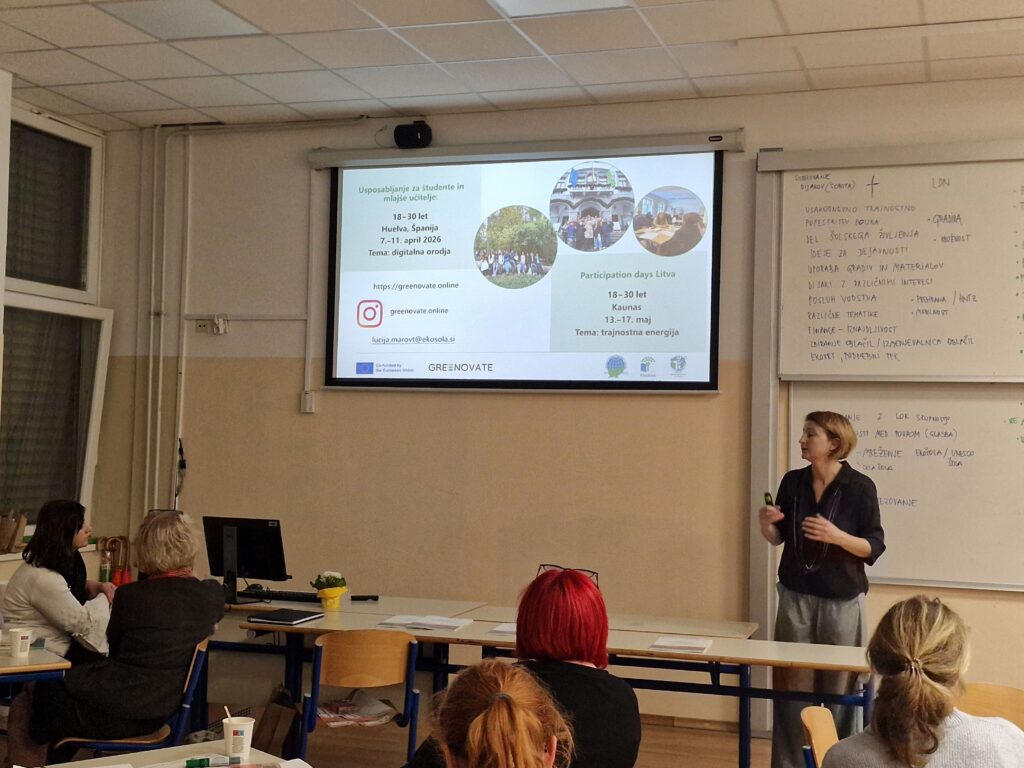
The event also included a presentation of the Greenovate project, highlighting the Participation Days implemented so far and the upcoming activities. Teachers were encouraged to integrate circular economy topics into their teaching practice and to support young people in becoming informed, responsible decision-makers -today in school, and tomorrow in society.
This local event represents another important step in the Greenovate 2.0 approach: connecting European sustainability frameworks with practical school-level implementation and strengthening the role of educators as key multipliers in the green transition.
The project Engaging Youth in a Digital Green Future 2.0 is implemented within the Erasmus+ programme and co-financed by the European Union.