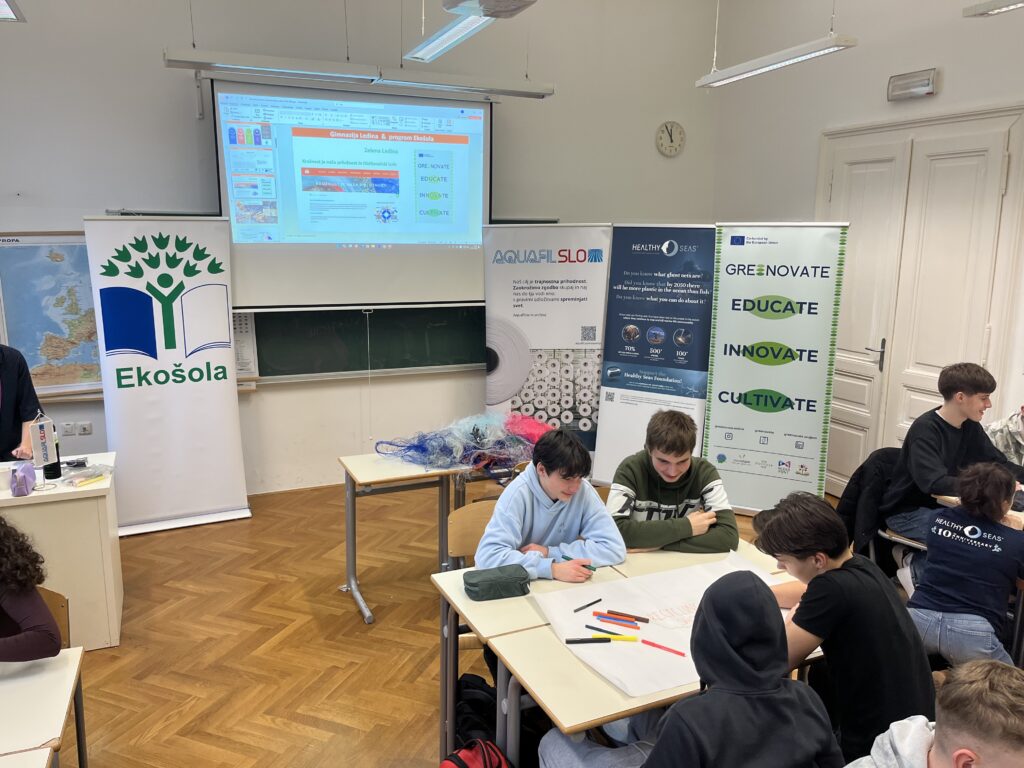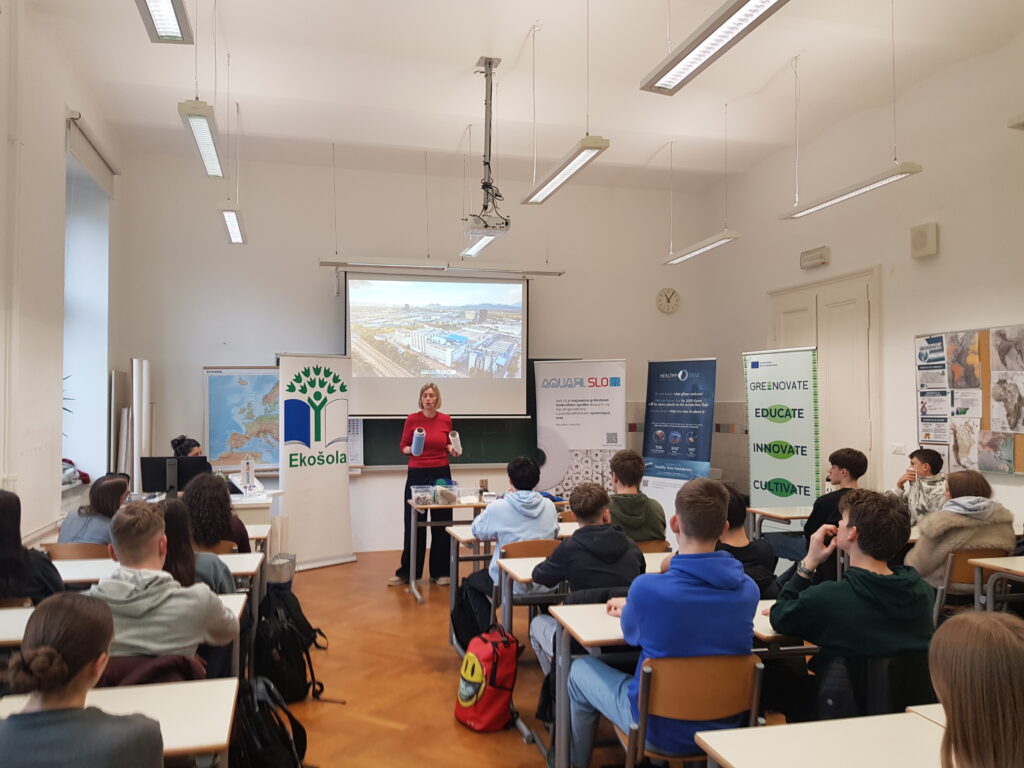
9 February 2026 – As part of the Greenovate 2.0 project (Engaging Youth in a Digital Green Future 2.0, Erasmus+) a local follow-up event was organised at Gimnazija Ledina in Ljubljana, bringing together 32 secondary school students to explore circular economy solutions in practice. The session has been co-hosted by representatives from AquafilSLO and Healthy Seas, who presented real-life examples of circular solutions in the textile value chain.
The event that was orgnized by DOVES – FEE Slovenia (programme Eco-Schools and Youg Reporters for the Environment) built directly on the methodology used during the Participation Days in Slovenia and aimed to transfer transnational learning into a local school setting. Students worked on the same practical challenge introduced during Participation Days: rethinking a product or service through the lens of circular economy principles. Through group work and guided facilitation, they analysed value chains, identified waste points, and proposed redesign solutions based on circular strategies such as reuse, repair, redesign and resource efficiency.
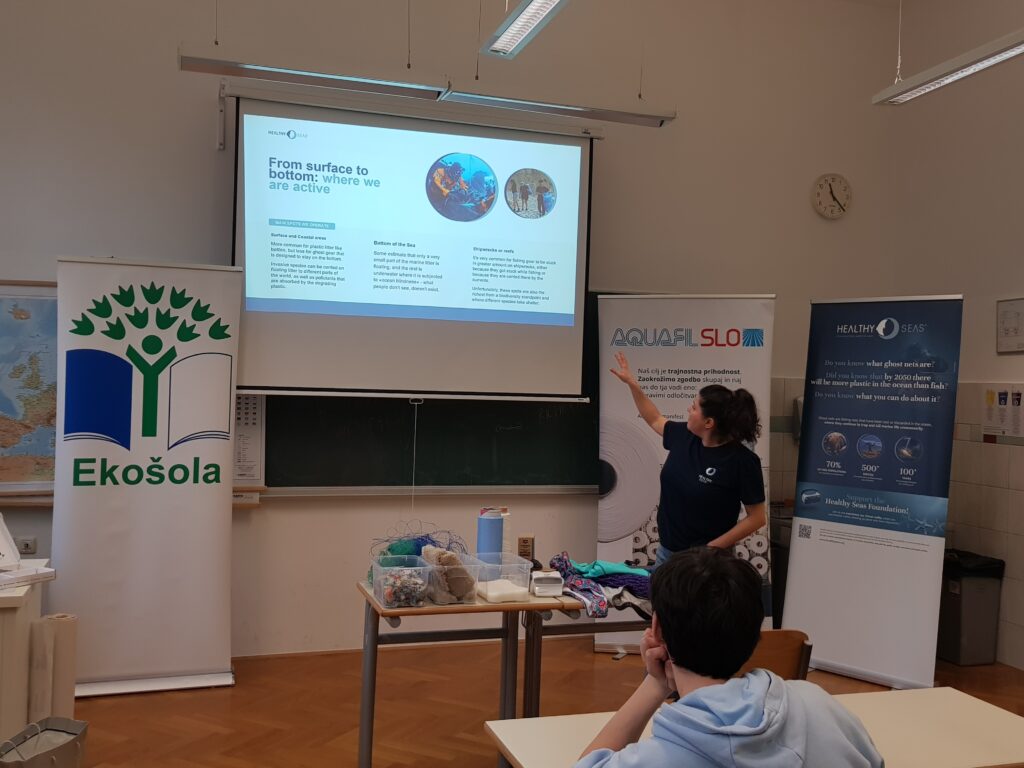
The session was enriched by the participation of representatives from AquafilSLO and Healthy Seas, who presented real-life examples of circular solutions in the textile value chain. Students learned how discarded fishing nets and other waste materials are collected and transformed into regenerated nylon (ECONYL®), demonstrating how innovation, environmental responsibility and industry can work together.
The discussion connected circular economy principles with the objectives of the European Green Deal and highlighted the role of young people as future decision-makers, consumers and professionals. The interactive format encouraged critical thinking, teamwork and practical problem-solving. The session has been impactful: students prepared an aticle for their school website Krožno gospodarstvo v praksi – Gimnazija Ledina and social media as well as for Eco-Schools website secetion Eco-Schools report: Krožno gospodarstvo v praksi – Ekošola . The topic and the exercise will be additionally followed in future lessons.
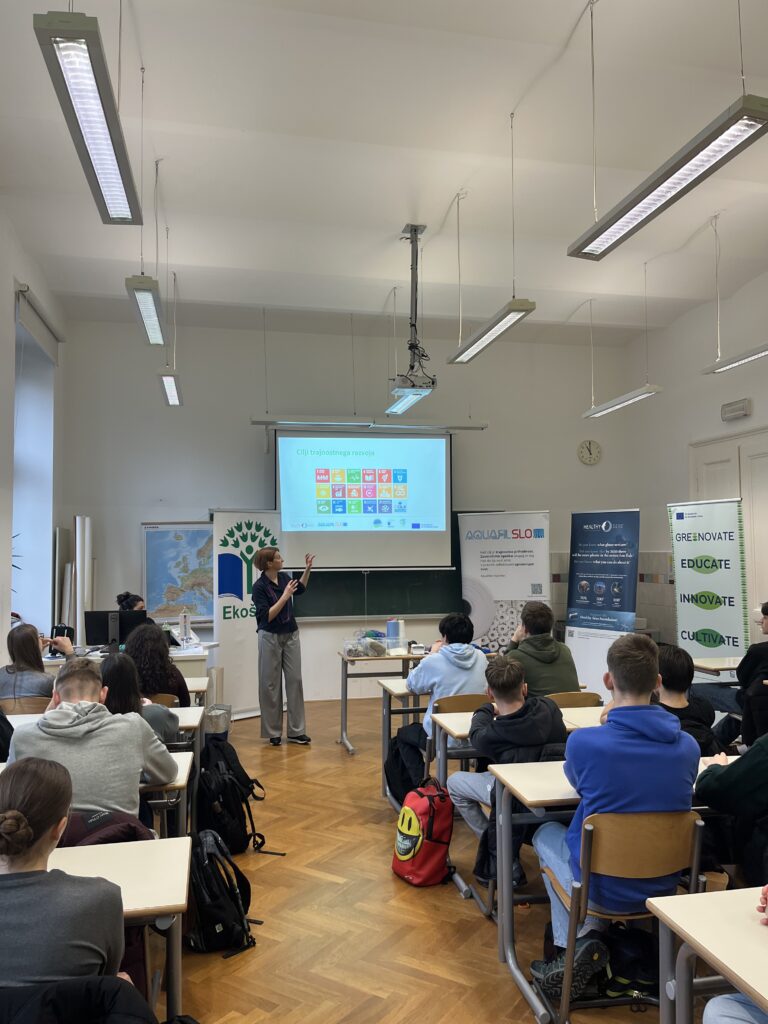
This local event represents an important step in the Greenovate 2.0 approach: linking transnational youth engagement with concrete local awareness actions, and empowering young people to move from understanding sustainability concepts to actively shaping circular solutions in their own communities.
The project Engaging Youth in a Digital Green Future 2.0 is implemented within the Erasmus+ programme and co-financed by the European Union.