
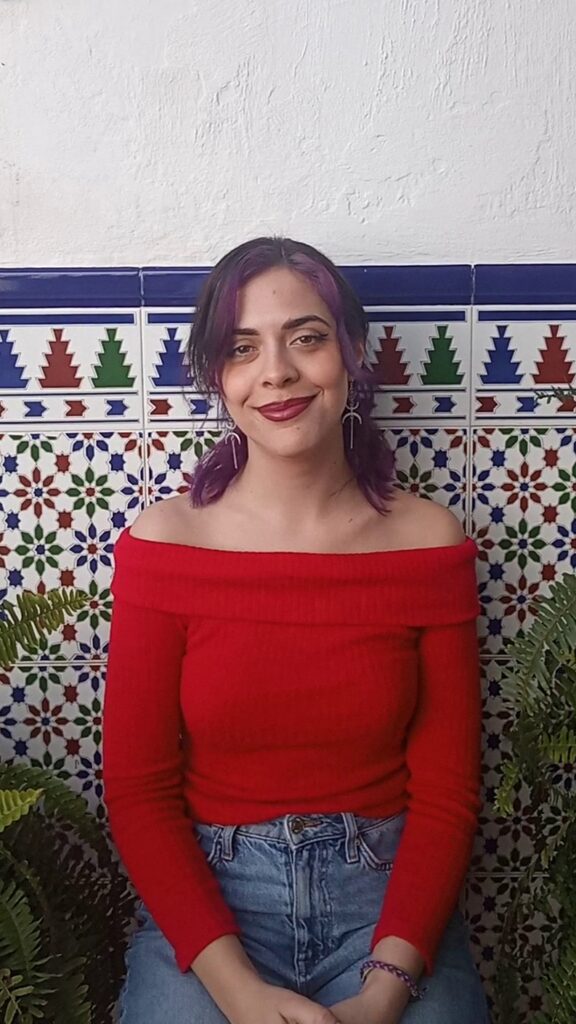
Hi, I’m Susana and I’m 23 years old. Thanks to my degree in Social and Cultural Anthropology and my current Master’s degree in Gender and Equality, I am committed to building a more inclusive future. By having a sustainable mindset, advocating for community-focused changes and engaging in initiatives like Greenovate, my goal is to play an active role in driving meaningful social and environmental changes towards progress.
1. What does sustainability mean to you in your daily life?
In my daily life, sustainability is about questioning our consumption patterns.
It’s about recognizing the planet’s biophysical limits and being mindful of the socio-ecological impacts of our purchases. It’s as simple as pausing before buying a new shirt and remembering the other twenty I already own.
By choosing consciousness over consumption, we can drive significant change and choose to consume more intentionally. After all, infinite growth is fundamentally incompatible with a finite planet.
2. Which SDG (Sustainable Development Goal) do you feel more connected to and why?
I feel especially connected to SDG 11 because it shows that it is necessary to transform the ways in which urban spaces are built and managed. This goal isn’t just about infrastructure, it’s about making cities inclusive, safe, resilient, and sustainable.
To achieve SDG 11 urban design must commit to social, economic, and environmental sustainability. This means implementing development policies that prioritize access to basic services, affordable housing, efficient public transport, renewable energy, and accessible green spaces for everyone.
Ultimately, I value this goal because it actively combats social exclusion and rethink urban design through a lens of sustainability.
3. What green competence do you think young people need the most today?
The most important green competence young people need today is a sustainable mindset.
This mindset helps them consider the environmental impact of their actions and lifestyle. It’s the ability to see an ad or a new trend and say: ‘Do I really need this or will this likely end up in a landfill within years?’.
In the end, being ‘green’ means learning not to buy on impulse. By shifting our habits, we can significantly reduce our demand on the planet’s finite resources.
4. How can young people initiate change in their communities?
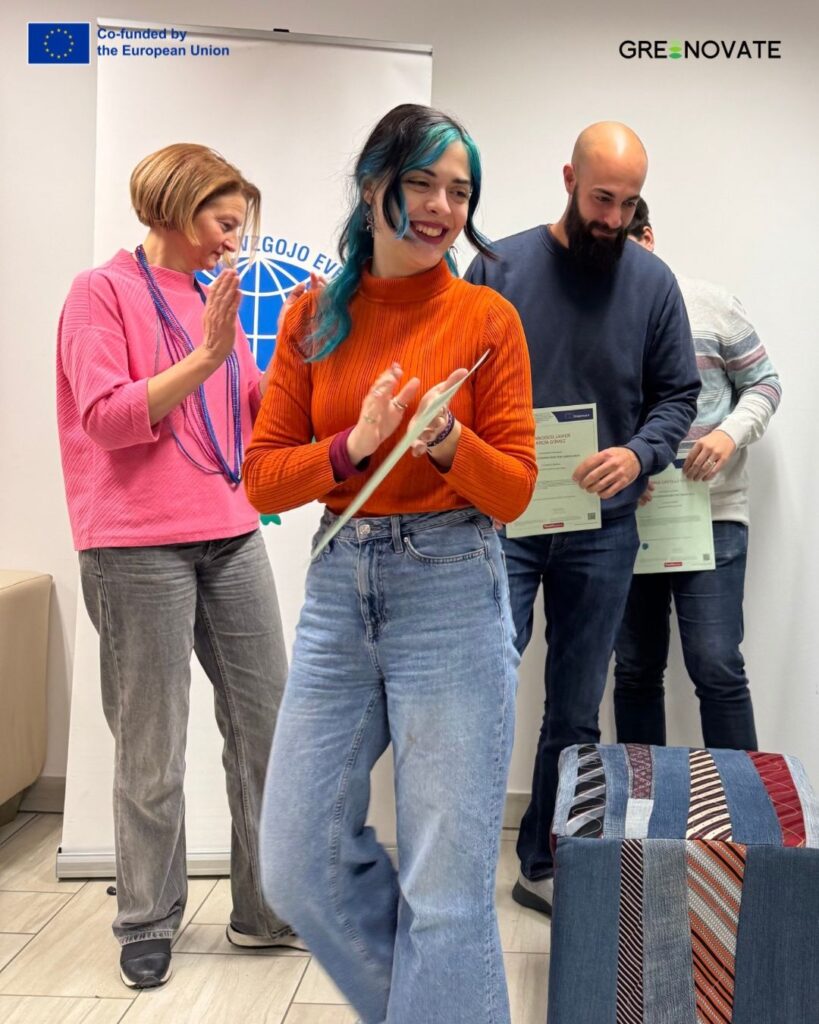
Young people can initiate change by engaging in local initiatives or projects like Greenovate.
This involvement has a powerful impact because it allows them, for example, to reclaim community spaces that aren’t solely focused on consumption or transit. Because, for me, it is essential to create greener, more inclusive areas for meeting and rest, and the best way to achieve this change is by advocating for them.
5. A message to other young Europeans
Remember that we have much more power than we realize, our small daily actions can lead to a much bigger change.
So choose to be part of the solution, not the problem.