
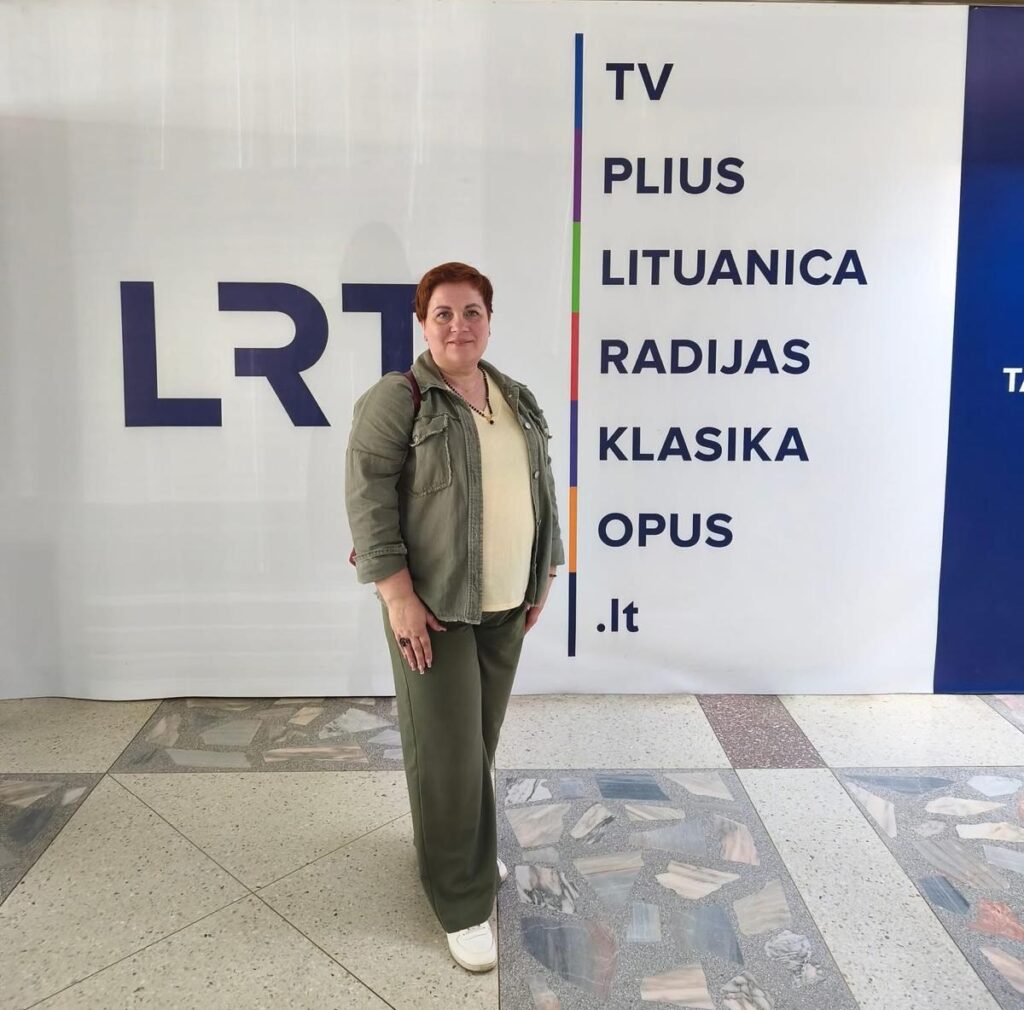
Dr. Vilma Liaudanskė, PhD of Social Sciences
Dr. Vilma Liaudanskė is a preschool educator whose work connects education, civic responsibility, cultural heritage, and environmental awareness. Her interest in sustainability grew from exploring the relationship between culture, traditions, and nature – and from the belief that being civic-minded begins with understanding our own roots and our connection to the world around us.
Through her work with children and participation in environmental initiatives, she helps demonstrate that sustainability is not only about protecting nature, but also about caring for our communities, heritage, and future generations.
What inspired you to explore the connection between culture, sustainability, and heritage?
The question of how culture, sustainability, and heritage are connected is very relevant today. What inspired me to explore this relationship was, first of all, the understanding that each of us should be civic-minded.
What does it mean to be civic-minded? For me, it means knowing where we come from – understanding our origins, our roots, our national heritage, and our traditions.
As I became more interested in our cultural heritage, I realized that our national traditions are deeply connected with nature. Traditionally, people saw themselves as an inseparable part of nature rather than something separate from it. I really value this idea because it directly resonates with our modern pursuit of environmental protection and sustainability.
How are cultural heritage and sustainability connected?
Our traditions can teach us a lot about our relationship with nature. When we look at our heritage, we can see how closely people’s lives were connected to the natural environment and how important nature was to everyday life.
By learning about and cherishing our traditions, we can also develop greater respect for the environment. Cultural heritage reminds us that we are part of something larger – our community, our history, and the natural world around us.
How can children become involved in environmental protection?
I work in a kindergarten, a preschool institution, so I believe that environmental awareness can begin from a very young age.
We often participate in national and nationwide campaigns and projects related to environmental protection. One example is “Darom” (“Let’s Do It”), a well-known environmental initiative in Lithuania that has been taking place for many years.
The whole community can get involved – staff, children, and families. For example, we can come together to clean up our local oak park. These activities give children the opportunity not only to learn about the environment, but also to experience what it means to take responsibility for the place where they live.
What can young people learn from connecting heritage with sustainability?
I think one of the most important lessons is that caring for the environment is also a form of civic responsibility.
When young people learn about their roots, traditions, and cultural heritage, they can begin to understand how previous generations related to nature. This can inspire them to think about how we live today and what kind of environment and society we want to leave for future generations.
Sustainability therefore becomes more than an environmental issue. It becomes part of our identity, our responsibility to one another, and our connection with the place we call home.
What message would you give to someone who wants to make a positive difference?
Start by becoming curious about your own roots and the world around you. Learn about your heritage, your community, and nature.
Being civic-minded does not necessarily require big actions. It can begin with caring for the place where you live, participating in community activities, teaching children to respect nature, or simply paying more attention to how our everyday choices affect others and the environment.